The number of requirements you need has changed, all the activities on this blog are still good, they just changed how many you need to do and some slight wording changes. but please check the new Requirements above to be sure you don't do unneeded work.
Learn about a real-life hero from another part of the world
who has helped the world be a better place.
Biographies for kids, Pick a handful you see as heroes, print them out and have the boys each pick one, read it and then tell you a couple cool things they learned.
With the guidance of your Webelos den leader, parent, or guardian,
select a carpentry project and build it.
Be sure to tie this with the blueprint drawing & project in Engineer, to get a two for one
This is my plan for a project.
List the tools that you use safely as you build your project;
create a list of materials needed to build your project.
Use worksheet linked below
Put a check mark next to the tools on your list that you used
for the first time.
Learn about a construction career. With your Webelos den leader,
parent, or guardian, visit a construction site, and interview someone
working in a construction career.
My plan is to visit with a local Home builder and go see one of their home sites, that's what we are doing!
Develop an awareness of the challenges of the blind through
participation in an activity that simulates blindness.
Why not a blindfold and have them walk around an area with obstacles (say your living room)
We had the boys blindfolded, and I threw balls and Frisbees around the back yard and the parents had to guide them without touching them to get the ball and then get back to where they started with it
Engage in an activity that simulates mobility impairment.
Take part in an activity that simulates dexterity impairment.
Have them put on thick work gloves and write therie name on a piece of papaer, and pcik up quarters and then dimes. Or tie there shoes, simulates small motor control problems (one of my personal issues)
With your den, participate in an activity that focuses on the
acceptance of differences in general.
I think something as cheezy as a sharing circle, where the adults and then the kids sharing something they are good at, and something that is/was an obstacle they worked to overcome would be good.
Try to bring out the idea that EVERYONE has deficits, of some kind.
Do two of the following:
Do a Good Turn for residents at a skilled nursing facility
or retirement community.
Invite an individual with a disability to visit your den,
and discuss what activities he or she currently finds challenging
or found challenging in the past.
We did this as part of #4
Attend a disabilities event such as a Special Olympics competition,
an adaptive sports event, a performance with sign language interpretation,
or an activity with service dogs. Tell your den what you thought
about the experience.
Talk to someone who works with people who have disabilities.
Ask what the person does and how he or she helps people with
disabilities.
What about your local Special Ed teacher?
Using American Sign Language, sign the Scout Oath.
And of course Google "art Gallery <put your city and state here>'
Create two self-portraits using two different techniques, such
as drawing, painting, printmaking, sculpture, and computer illustration.
This may just be my opinion here, but the key is simple cheap and doable easily at a scout medium.. Obviously if you have special access or talents to do something cooler do that..
Pencil and Paper, sketching
Crayons
Do two of the following: (Art supplies all over Amazon)
Draw or paint an original picture outdoors, using the art
materials of your choice.
Use clay to sculpt a simple form.
Create an object using clay that can be fired, baked in
the oven, or air dried.
Create a freestanding sculpture or mobile using wood, metal,
papier-mâché, or found or recycled objects.
Make a display of origami or kirigami projects.
Use a computer illustration or painting program to create
a work of art.
Create an original logo or design. Transfer the design onto
a T-shirt, hat, or other object.
Using a camera or other electronic device, take at least
10 photos of your family, a pet, or scenery. Use photo-editing
software to crop, lighten or darken, and change some of the
photos.
Create a comic strip with original characters. Include at
least four panels to tell a story centered on one of the points
of the Scout Law. Characters can be hand-drawn or computer-generated.
Choose one of the following methods to show your artwork:
Create a hard-copy or digital portfolio of your projects.
Share it with your family and members of your den or pack.
Take digital photos of everyone work, then see comments on B, do this slide show at your den meeting instead of a pack meeting and your are done.
Display your artwork in a pack, school, or community art
show.
Combine all the digital photos into a slide show, and play it in the background at a pack meeting.
We use a digital projector, but a phone or tablet set up on a table showing the slide show will count.
Add a few slides with your patrol name and Art Explosion to explain what it's all for!
State the safety precautions you need to take before doing any
water activity.
Recognize the purpose and the three classifications of swimming
ability groups in Scouting.
Discuss the importance of learning the skills you need to know
before going boating.
Explain the meaning of "order of rescue" and demonstrate the
reach and throw rescue techniques from land.
Attempt the BSA swimmer test.
Demonstrate the precautions you must take before attempting
to dive headfirst into the water, and attempt a front surface dive.
Learn and demonstrate two of the following strokes: crawl, sidestroke,
breaststroke, or elementary backstroke.
Invite a member or former member of a lifeguard team, rescue
squad, the U.S. Coast Guard, U.S. Navy, or other armed forces branch
who has had swimming and rescue training to your den meeting. Find
out what training and other experiences this person has had.
Demonstrate how to correctly fasten a life jacket that is the
right size for you. Jump into water over your head. Show how the
life jacket keeps your head above water by swimming 25 feet. Get
out of the water, remove the life jacket and hang it where it will
dry.
If you are a qualified swimmer, select a paddle of the proper
size and paddle a canoe with an adult's supervision.
Note: I have my comments on these, if you like one of the experiments that I don't' choose, or don't like and you thinks it's awesome, totally ignore me and do it your way,
!!!!This is just all my personal opinion !!!!
I'll try to add links even for the ones I don't like. after you are done send me info on how you did it and I'll add it if it's unique and cool!
Do all of these: An experiment is a "fair test" to compare possible explanations.
Draw a picture of a fair test that shows what you need to do to
test a fertilizer's effects on plant growth. Example of fair test including this one
Much more detailed one 1. Visit a museum, a college, a laboratory, an observatory, a zoo,
an aquarium, or other facility that employs scientists. Prepare
three questions ahead of time, and talk to a scientist about his
or her work.
.
Get the questions written down ahead of time,
My wife works at a cancer research center, if I find and easier one I'll post it here, but it's going to be Pflugerville, TX specific.
Questions to ask yourself if you can't think of a science lab near you
Is there a university you can go visit?
What about a geology, highway and building departments use geologists.
What about a nature preserve, aquarium or zoo? All forms of Biological sciences..
Remember they don't have to be doing hard science, if you live in a really small town, find someone who has a bachelors in science or does lab work.
Maybe for the local clinic or Vet...
All it needs is some one who studied science, and uses some of that knowledge in work.
Lots of engineering type sciences if you get really stuck, master electricians and the like, but try chemistry or biology...first, A vet can talk about the scientific method in diagnosis and the biology involved...
Or a Dr... Or a medical technician who's doing the tests for a Dr.
Don't let the fact that you don't know some one who's running the Cern supercollider stop you from finding a scientist... a Scientist is some one who studied and applies the scientific method... that's all...
. 2. Complete any four of the following:
Carry out the experiment you designed for requirement 1,
above. Report what you learned about the effect of fertilizer
on the plants that you grew.
IMHO Dont' do this one as a den activity, it's great at home, buy why do an activity that's going to take weeks at a den meeting?
If you really want to do this, look at the links in Req 1,.
Carry out the experiment you designed for requirement 1,
but change the independent variable. Report what you learned
about the effect of changing the variable on the plants that
you grew.
See choice a
Build a model solar system. Chart the distances between
the planets so that the model is to scale. Use what you learn
from this requirement to explain the value of making a model
in science.
There are lots of great how to videos on you tube spend time looking at them. There is way to much for me to break down here. Find a build video of your rocket by name, then look up how to pre for launch and launch videos at minimum.
Create two circuits of three light bulbs and a battery.
Construct one as a series circuit and the other as a parallel
circuit.
This kit has 2 switches 2 bulbs, and test leads and battery holder all you need is one more bulb holder and a bulb for it, but it's only for one scout at a time...
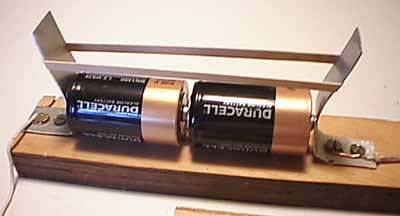
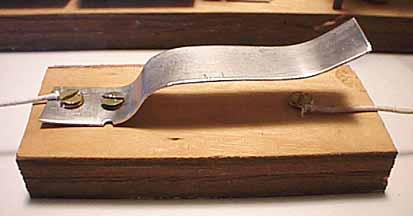
I'm trying to figure out a cheap way to build a kit for each boy, so there is no waiting, here is my current thinking
Here is a short lesson in the voltage fo standard watch button cells
A 2032 button cell the 20 is the size (20mm) the 32 is the voltage 3.2v
So a 2025, is 20mm 2.5v. etc...just get the voltage you nee
If you want to use big cells, try this, just make sure you have enough voltage for whatever lamps you use.
OPTION1 - LEDs..
You Dont' need to buy a base, just clip straight to the leads.
You can get 20-100 for around $10, as opposed to $5+ each for a bulb and base
Remember
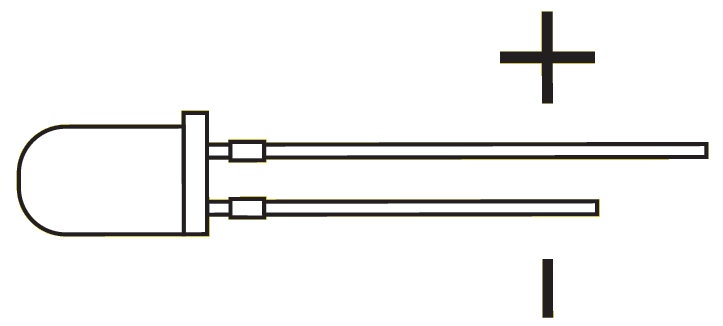
polarity, a diode is a 1 way gate for electricity, so a LED (light
emitting diode) hooked up backwards, is basically an open circuit. (not going to do anything)
When you get your leds check the voltage range, and buy a matching button cell,
If you add to much voltage it makes it brighter but shortens the
life, eventually so short it just dies...life is easier if you don't
over drive the LEDs.
If you add to little voltage it will dim, or maybe not light up at all...
The bulbs above are 2.5v so you can glue wires to a single D,C or AA or AAA battery and they will work dimly as your power source..better to tape up two of them or glue them up for 3v.
Study the night sky. Sketch the appearance of the North
Star (Polaris) and the Big Dipper (part of the Ursa Major constellation)
over at least six hours. Describe what you observed, and explain
the meaning of your observations.
Six hours, are you on crack? Not doing this one... These are 4th graders...
If you do this, and have an android phone get Google Sky Map, it's awesome, point you cell phone at the constellation of stars you want to identify and it shows it to you in real time. I'm sure IPhone has something similar, but i don't know it's name.
If what I'm saying about google sky map doesn't' make sense, watch this movie
With adult assistance, explore safe chemical reactions with
household materials. Using two substances, observe what happens
when the amounts of the reactants are increased.
1 plastic spoons for measuring the dry ingredients
I also reused my disposable droppers from Bear Sink & Swim experiment from last year... and it worked great for the small quantity experiment they sprinkled baking soda on the bottom of the cup then dripped in single drops of vinegar, then for the big one we put half a cup of soda and half a cup of vinegar together..sploosh!
Explore properties of motion on a playground. Does the weight
of a person affect how fast they slide down a slide or how fast
a swing moves? Design a fair test to answer one of those questions.
Study weight and amount of effort on a swing set... done!
Read a biography of a scientist. Tell your den leader or
the other members of your den what the scientist was famous
for and why his or her work is important.
I like to pick enough good biographies to have one for each boy, plus some spares. Print them out and have the kids each pick one, read it (with parental help) and answer the questions. Then tell what they thought was cool about their person.(Parents are allowed to help remind them)
Print out maps for the boys with compass, distances (even if only in blocks) and landmarks.
Give each boy a turn with the map and the compass, teach them to orient the north on the map to match the north on the compass first thing, before they try to read it any further. Each boy gets a turn to be the "trail leader"
we are doing an urban-ish hike, so they will use compass and street names to navigate.
Each boy gets a turn using the map to orient themselves and pick the next direction we go.
Each boy gets his own copy of the map and compass to follow along.
Remember, first orient the map to north, second find your self on the map... then try to find yoru way.
Teach each boy to watch the sun, or other land marks at every change of direction to figure out which "compass direction" he is moving towards now, and what landmark marks the turn. (we are going north west on main street at the corner of main and 1st. we are taking the right fork of the trail north., etc) (This is huge)
Have each boy after he has gone a few steps down the path, stop, and turn around, and look at the landmark (street sign, fork in the road, etc) from the _other_ side, so that if he has to back track later he will recognize it. (This is huge)
Complete a service project on or near the hike location.
We are going to hike past the school and plant trees at the elementary school, my 18yr old planted trees there with his wolf den and I get a happy feeling every time I drive past them :)
Perform one of the following leadership roles during your hike: trail leader, first-aid leader, lunch leader, or service project
leader.
IMHO, Rotate positions hike leader first aid leader, and tail end Charlie (last scout in line) at ever crossing or intersection, so every boy does each position..